































Table of Contents

Neerkaapom Farmers Awareness Workshop
Neerkaapom is an initiative by Mobitech Wireless Solution dedicated to promoting water conservation, sustainable farming, rainwater harvesting, and smart irrigation practices. Through this awareness workshop, we aim to help farmers protect every drop of water while improving agricultural productivity for future generations.
Welcome Address
Good morning to you all.
I warmly welcome all the farmers who have gathered here today to attend this workshop.
My name is Raja, and I am a representative of Mobitech Wireless Solution. Our organization was established in 2010, and since then we have been working continuously to support farmers through innovative agricultural solutions.
Today, we are proud to launch the first edition of Neerkaapom in Sathyamangalam.
Since I was born into a farming family, I understand how important water is in agriculture. We started this initiative because we want to conserve water and protect it for future generations.
That is why we founded this organization, and today we are happy to introduce Neerkaapom for the first time in Sathyamangalam.
Importance of Water Conservation
Water conservation is one of the most important aspects of agriculture.
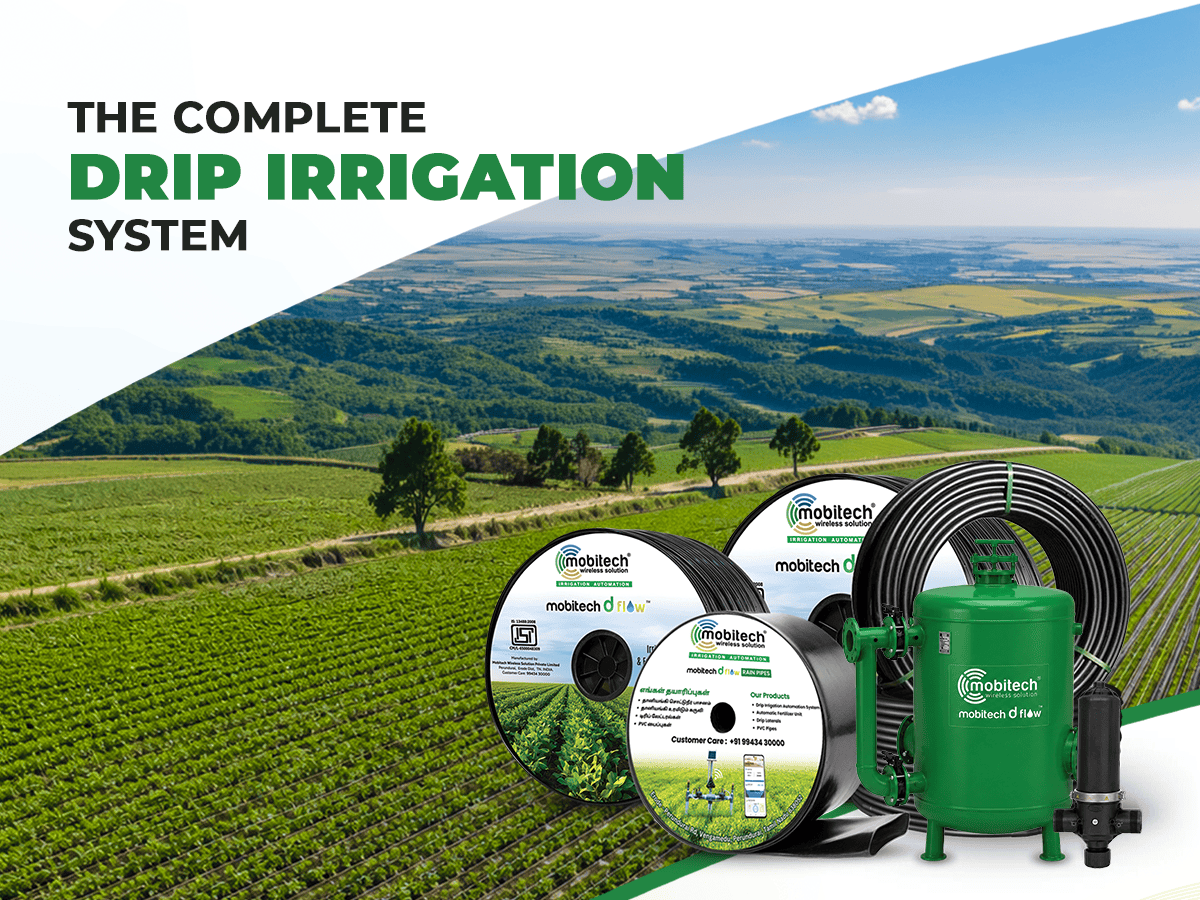
Around the 1980s, the concept of drip irrigation was introduced from Israel. The main advantage of drip irrigation is that it supplies only the required amount of water directly to the plant roots.
In traditional irrigation methods, much of the water is lost through evaporation before it reaches the roots. As a result, a significant amount of water is wasted.
Drip irrigation reduces this wastage by delivering water directly to the root zone, helping farmers save nearly 50% of irrigation water while improving crop growth.
| Traditional Irrigation | Drip Irrigation |
|---|---|
| Flood irrigation | Water delivered directly to roots |
| High evaporation losses | Minimal water wastage |
| Higher water consumption | Up to 50% water savings |
| Uneven irrigation | Uniform irrigation |
Smart Irrigation Automation
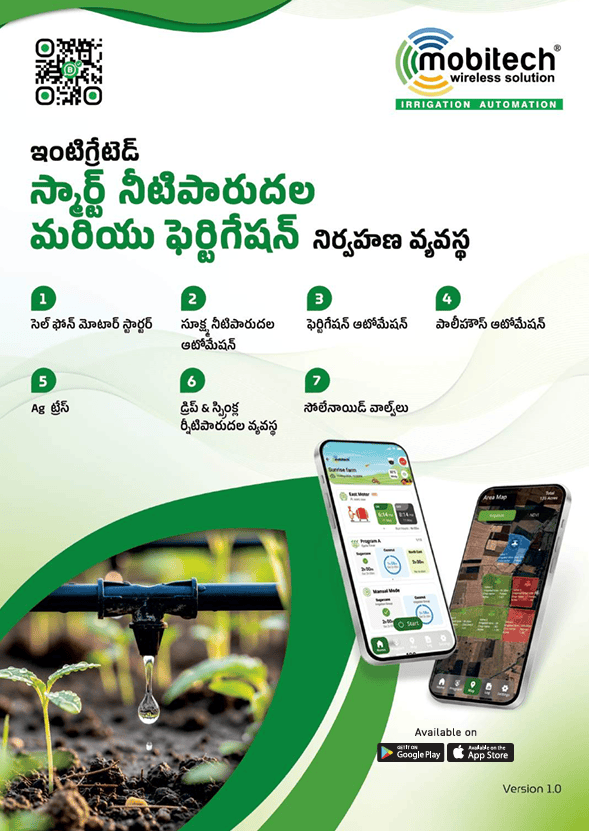
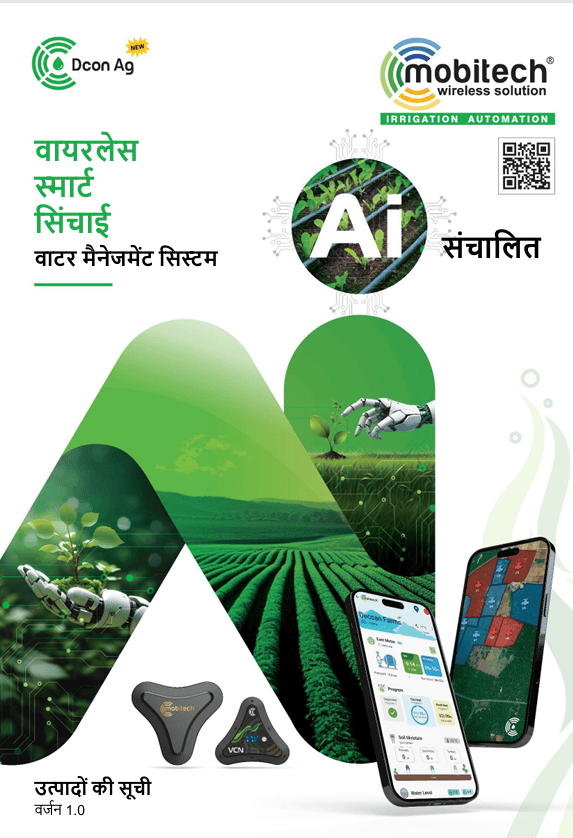
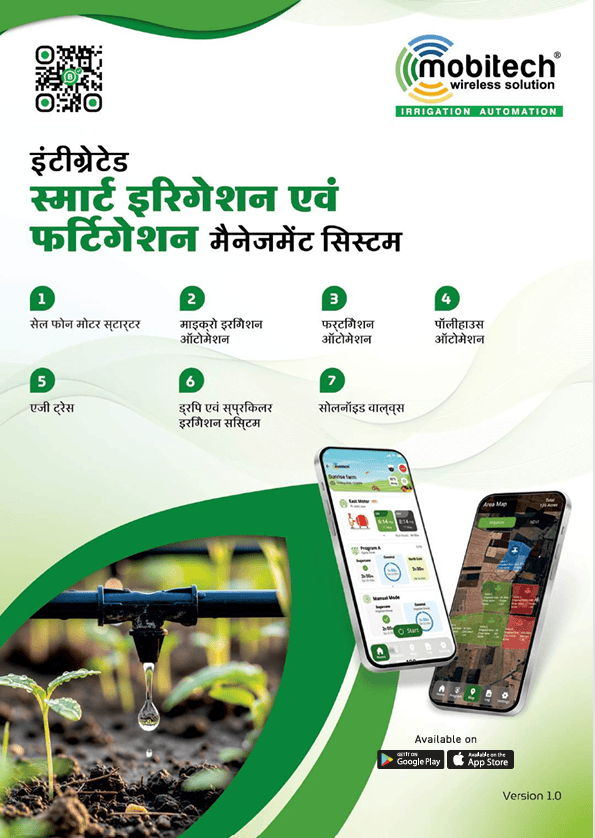
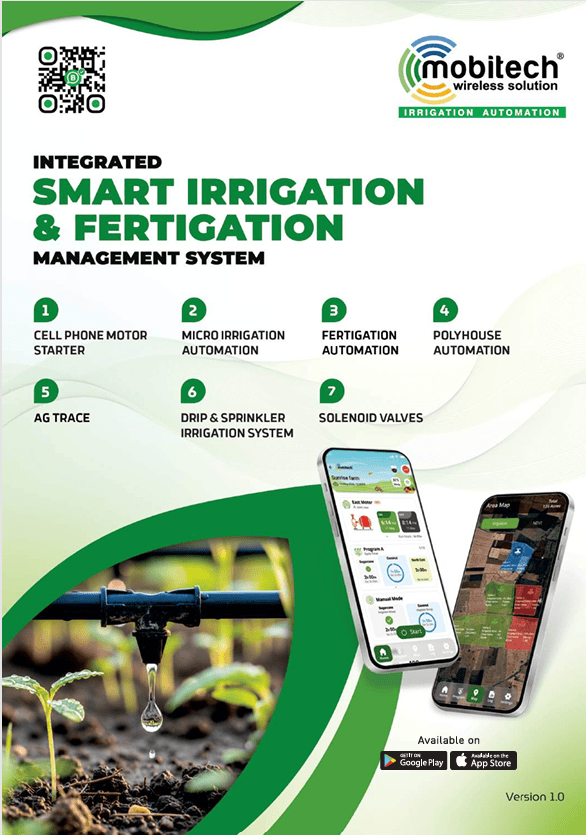
The next advancement after drip irrigation is smart irrigation automation.
Automation does much more than simply switching a motor ON or OFF.
It checks whether water is available, whether irrigation is required, and supplies the right amount of water at the right time.
This helps farmers reduce water wastage, save labour, improve irrigation efficiency, and manage their farms more effectively.
- Automatic motor control
- Automatic valve operation
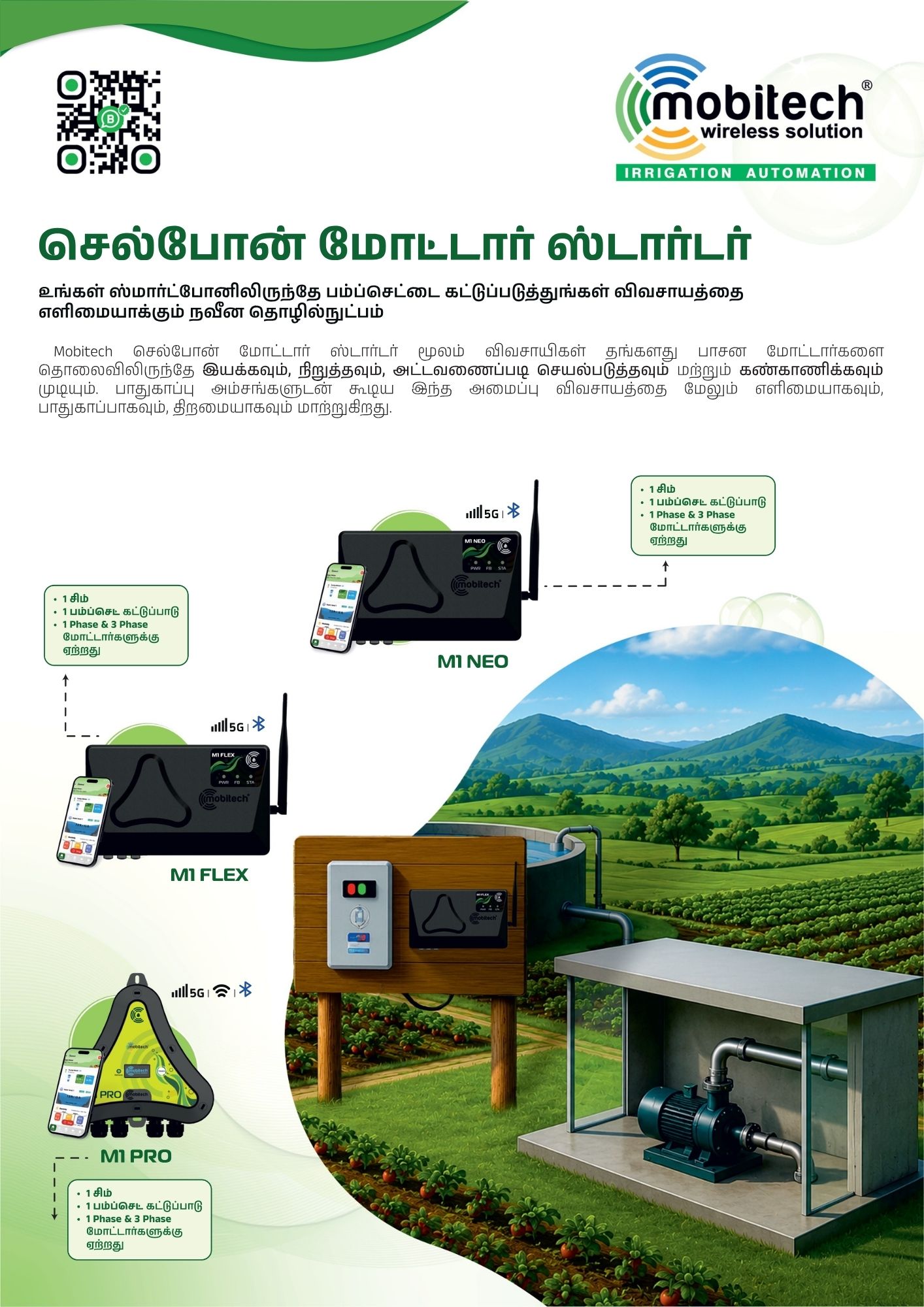
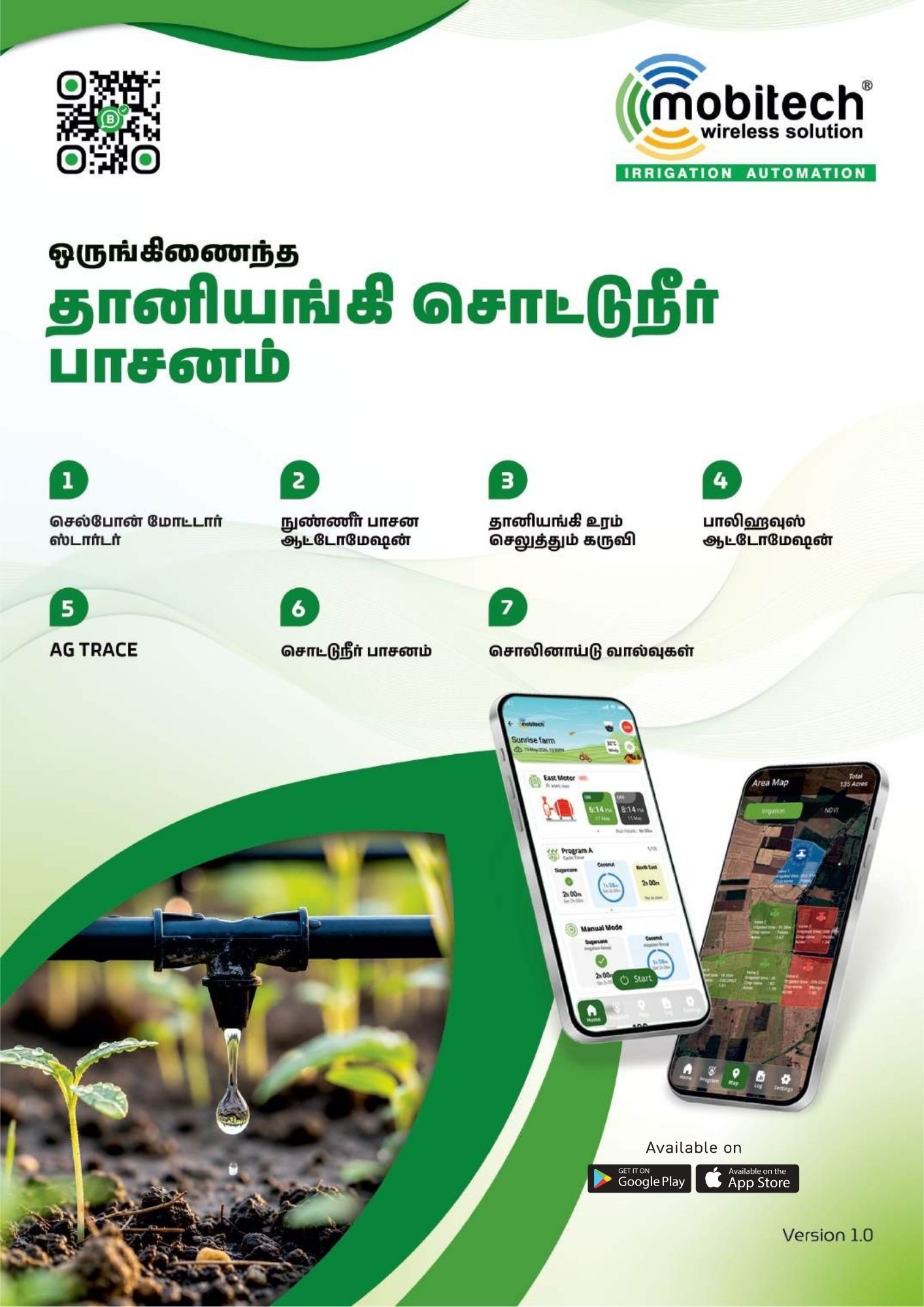
- Remote monitoring through mobile
- Reduced labour requirements
- Better water management
- Improved crop health
Rainwater Conservation
Now let us talk about water conservation.
When the rainy season begins, farmers in Sathyamangalam mainly depend on the Bhavanisagar Dam, rivers, canals, open wells, and borewells for irrigation.
Whenever it rains, we should make every effort to conserve rainwater instead of allowing it to flow away.
In earlier days, farmers built small earthen bunds to retain rainwater within their fields. Today, we should continue this practice by creating farm ponds and rainwater harvesting structures.
When rainwater is stored in ponds, it gradually percolates into the ground and recharges nearby wells and borewells.
Rainwater is naturally pure and has excellent water quality. That is why it is one of the best sources for groundwater recharge.
Therefore, we should conserve as much rainwater as possible.
Borewell Recharge
Another effective method is borewell recharge.
If you have a borewell, dig a recharge pit around it approximately 10 feet deep and 3 to 4 feet wide, and fill it with gravel and filter materials.
When it rains, water enters the recharge pit, filters naturally into the soil, and replenishes groundwater around the borewell.
The more rainwater we recharge into the ground, the better the groundwater level will be in that area.
This is one of the most effective ways to protect borewells during drought conditions and ensure long-term water availability.
Key Takeaway:
Every drop of water saved today is an investment in tomorrow’s harvest. By adopting drip irrigation, rainwater harvesting, borewell recharge, and smart irrigation automation, farmers can conserve water, improve crop yields, reduce labour, and build a sustainable future for agriculture.
Water Conservation Begins with Smart Irrigation
Water is the foundation of agriculture. Although drip irrigation has already helped farmers save
nearly 50% of irrigation water, the next major advancement is irrigation
automation.
Instead of manually operating pumps and valves, an automated irrigation system delivers the right
quantity of water at the right time. It checks water availability, monitors irrigation schedules, and
ensures crops receive only the amount of water they actually require.
This reduces unnecessary irrigation, improves water-use efficiency, and supports healthier crop
growth.
Rainwater Harvesting for Future Generations
Farmers in Sathyamangalam largely depend on the Bhavanisagar Dam, rivers, canals, borewells,
and open wells for irrigation. However, rainfall should never be allowed to flow away without being
stored.
Traditional farming methods encouraged retaining rainwater inside fields through bunds and farm
ponds. These simple practices allow rainwater to slowly recharge nearby wells and borewells.
Rainwater is naturally soft, clean, and ideal for groundwater recharge. Conserving every drop today
ensures reliable water availability for future farming seasons.
Borewell Recharge Improves Groundwater
Another effective method discussed during the workshop was borewell recharge.
1
Farmers can dig a recharge pit around the borewell, approximately 10 feet deep and 3–4 feet wide,
filled with gravel and filtering materials.
During rainfall, water naturally seeps through the recharge pit and replenishes groundwater
around the borewell. This significantly improves borewell sustainability, especially during drought years.
Avoid Over-Irrigation
Many farmers believe that applying more water will automatically produce higher yields. However,
excessive irrigation often damages crops, wastes water, and reduces irrigation efficiency.
Providing crops with only the required amount of water maintains proper soil moisture, encourages
healthy root development, and improves nutrient absorption.
Studies and practical field experience have shown that efficient irrigation can save nearly
50% water while increasing crop yield by 30–40%.
For example, in banana cultivation, improved irrigation management can increase bunch weight
from approximately 25 kg to 27–30 kg without increasing labour or cultivation costs.
Challenges Faced During Manual Irrigation
Managing irrigation manually becomes increasingly difficult as farm size increases.
A farmer managing 10 acres may have 10–15 irrigation valves. Due to irregular electricity supply
and labour shortages, farmers often travel across the farm at night to manually operate each valve. </ p>
This process consumes valuable time and frequently results in uneven irrigation. Crops near the
first valve receive sufficient water, while crops at the end of the irrigation line may receive less water,
affecting uniform crop growth.
Manual irrigation also extends irrigation cycles over several days, increasing labour requirements
and electricity consumption.
How Smart Irrigation Automation Helps
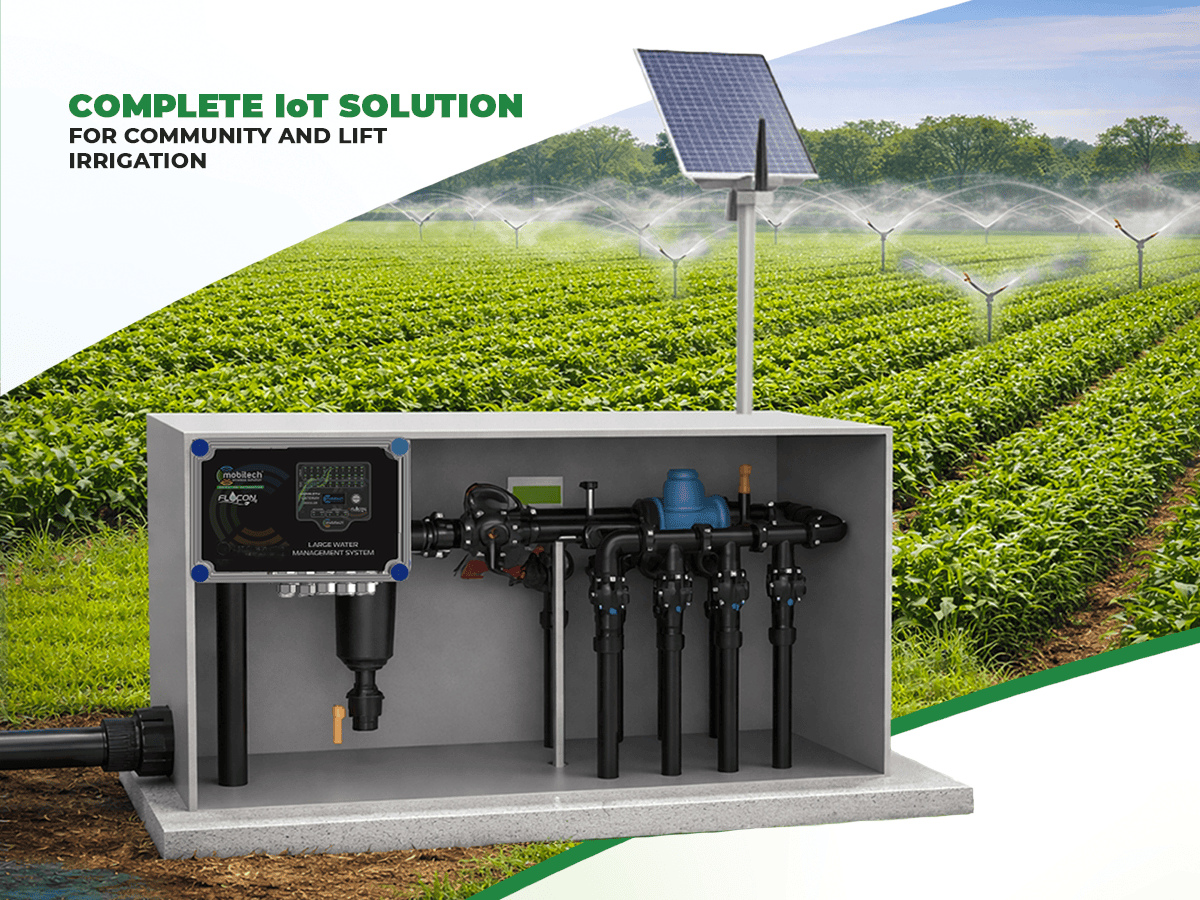
With irrigation automation, every valve can be scheduled individually.
For example, if each irrigation zone requires two hours of watering, the controller automatically
opens and closes the valves according to the programmed schedule.
Farmers no longer need to remain in the field throughout the night or manually switch valves. The
entire irrigation process operates automatically, even during late-night electricity supply.
Using a mobile application, farmers can monitor irrigation status, check water availability, and
control pumps remotely from anywhere.
Motor Protection and Service Alerts
Automation systems also protect valuable borewell motors.
They continuously monitor voltage fluctuations, power failures, phase imbalance, dry-run
conditions, and motor health.
Whenever an abnormal condition is detected, the system immediately sends an alert to the
farmer’s mobile phone and safely stops the motor before major damage occurs.
This reduces maintenance costs, minimizes downtime, and prevents crop losses caused by
unexpected motor failures.
Technology Supports Every
Farmer
Whether practicing organic farming or conventional farming, every farmer shares the same
objective—producing healthy crops while reducing costs.
Smart irrigation automation helps farmers save water, reduce labour, protect equipment, and
improve productivity without changing existing farming practices.
Many farmers using these systems have already reported significant improvements in irrigation
efficiency, water conservation, and crop performance. Their experiences demonstrate that adopting
modern irrigation technology is one of the most practical steps toward sustainable agriculture.
Soil Nutrition Must Be Balanced
The workshop concluded with an important reminder about soil nutrition.
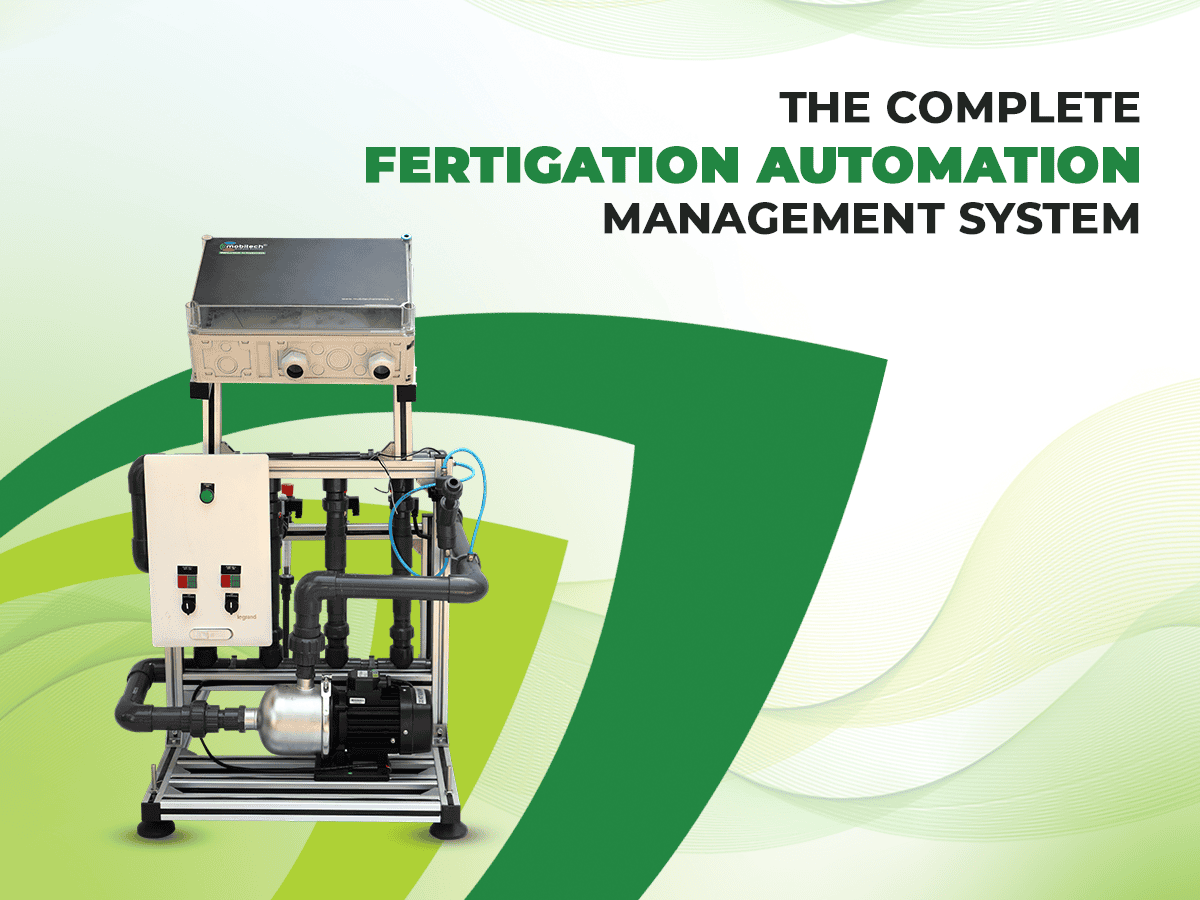
Many farmers apply fertilizers according to fixed schedules, such as 30 kg of urea or 25 kg of
potash every month. However, crops require balanced nutrition based on their growth stage and soil
condition—not simply a fixed routine.
Just as humans cannot remain healthy by eating food without drinking enough water, crops also
require the correct balance of water and nutrients. Proper irrigation combined with balanced
fertilization leads to healthier plants, higher yields, and sustainable farming.
Soil Nutrition Must Be Balanced
Neerkaapom Farmers Awareness Workshop concluded with a simple yet powerful message—every drop of water matters. As water resources continue to decline, adopting efficient irrigation practices and conserving rainwater are no longer optional but essential for sustainable agriculture.
Throughout the workshop, farmers learned how drip irrigation, smart irrigation automation, rainwater harvesting, and borewell recharge can significantly improve water-use efficiency while reducing labour, electricity consumption, and irrigation costs. The importance of balanced irrigation and proper soil nutrition was also emphasized to help achieve healthier crops and higher yields.
Technology and traditional farming knowledge can work together to build a more resilient agricultural future. By adopting modern irrigation solutions while continuing proven water conservation practices, farmers can protect groundwater resources, improve farm productivity, and ensure reliable irrigation for future generations.
The workshop concluded with an appeal to every farmer to become a guardian of water. Small actions taken today—such as conserving rainwater, avoiding water wastage, and using smart irrigation—will create a lasting impact on agriculture and the environment.
Final Message:
Every drop of water saved today is an investment in tomorrow’s harvest. Together, through responsible water management, sustainable farming practices, and smart irrigation technology, we can protect our precious water resources and build a prosperous future for agriculture.