Future of Smart Irrigation System: Benefits, Technology & Smart Farming
Imagine a farmer who no longer needs to visit the field just to switch on a motor,
check soil moisture, or decide when to irrigate. Instead, the irrigation system
monitors field conditions, follows a smart schedule, and delivers water when the
crop actually needs it.
This is the idea behind a Smart Irrigation System.
As water scarcity, rising electricity costs, labour shortages, and unpredictable
weather continue to challenge modern agriculture, smart irrigation is becoming
an important part of sustainable and efficient farming.
In this blog, let’s explore what a smart irrigation system is, how it works,
its major benefits, and how technologies such as IoT, AI, sensors,
weather monitoring, and automation are shaping the future of irrigation.
What Is a Smart Irrigation System?
A Smart Irrigation System is an automated irrigation solution
that uses sensors, controllers, weather information, and connected technologies
to manage irrigation more efficiently.
Unlike traditional irrigation, where farmers manually operate pumps and valves
mainly based on fixed schedules, a smart system can make irrigation decisions
using real-time field conditions.
For example, the system can consider:
- Soil moisture levels
- Weather conditions
- Rainfall
- Crop requirements
- Water availability
- Irrigation schedules
- Tank or water-level information
The result is simple:
water is supplied when and where it is needed instead of watering blindly.
How Does a Smart Irrigation System Work?
A smart irrigation system generally works through a combination of
sensors, controllers, communication technology, and automated irrigation equipment.
1. Sensors Collect Field Data
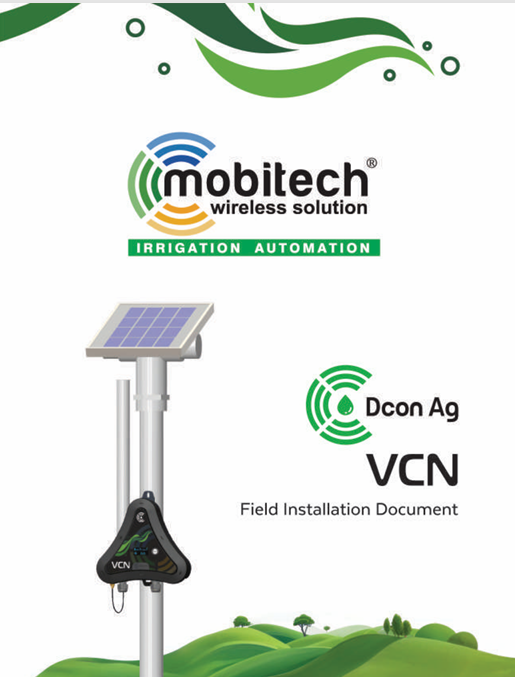
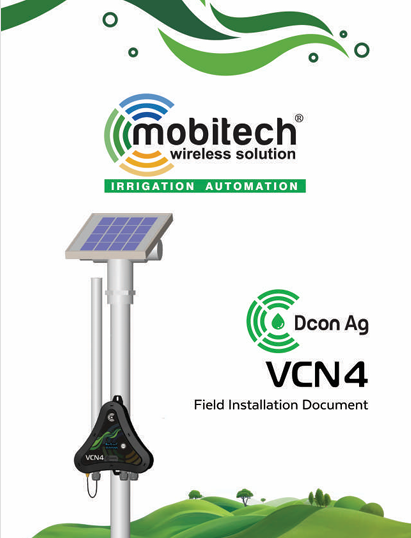
Sensors can monitor important parameters such as soil moisture, temperature,
rainfall, humidity, and water levels.
This information helps determine whether irrigation is actually required.
2. Smart Controller Processes the Information
The controller receives information from sensors and applies predefined
irrigation rules or schedules.
Depending on the system, irrigation can be triggered based on soil conditions,
timing, weather data, or a combination of different parameters.
3. Automated Valves Control Water Flow
Once irrigation is initiated, automated valves can open and close according
to the programmed irrigation plan.
This allows different sections of a farm to be irrigated according to
their individual requirements.
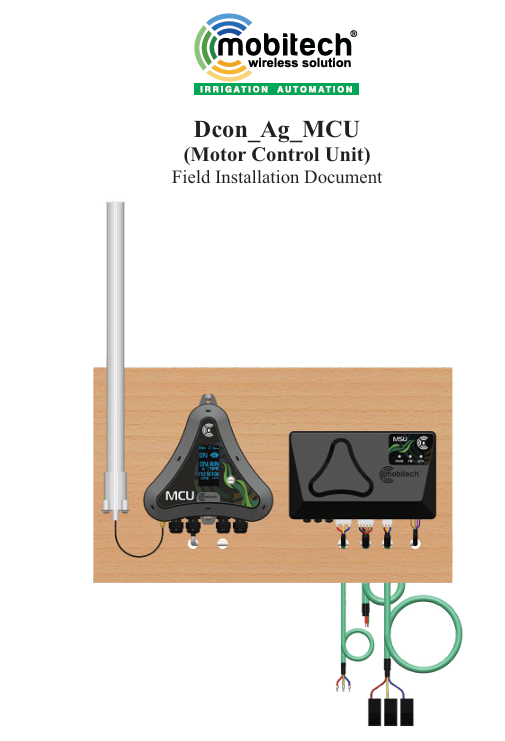
Smart irrigation systems can also automate irrigation pump operation.
Instead of manually switching the motor ON and OFF, farmers can control
or automate the motor through the irrigation controller.
5. Farmers Can Monitor Irrigation Remotely
Connected irrigation systems can provide remote access through a smartphone
or other interface.
This means farmers can monitor and manage irrigation without being
physically present at the farm.
Why Is Smart Irrigation Becoming Important?
Traditional irrigation can lead to several problems.
A field may receive water even after rainfall. A pump may continue running
longer than necessary. Some areas may receive excess water while others
may receive insufficient irrigation.
At the same time, farmers are dealing with:
- Increasing water scarcity
- Unpredictable rainfall
- Rising energy costs
- Labour shortages
- Larger farm sizes
- Increasing demand for productivity
Smart irrigation addresses these challenges by bringing
automation and data-driven decision-making into irrigation management.
Key Benefits of Smart Irrigation Systems
1. Saves Water
One of the biggest advantages of smart irrigation is improved water management.
By using soil moisture data, weather information, and automated scheduling,
the system can reduce unnecessary irrigation and help deliver water more efficiently.
Less unnecessary watering = Better water utilization.
2. Reduces Manual Work
Farmers do not always need to travel to the field to operate every motor
and valve manually.
Automation can take care of repetitive irrigation operations, allowing
farmers to spend more time on other important farm activities.
3. Improves Irrigation Accuracy
Smart irrigation allows water to be distributed according to predefined
schedules or field conditions.
Different zones can be controlled independently, helping provide more
consistent irrigation across the farm.
4. Helps Reduce Energy Consumption
When irrigation is better controlled, unnecessary pump operation can be reduced.
This can help farmers manage electricity usage more efficiently,
especially on farms with multiple motors and irrigation zones.
5. Supports Better Crop Growth
Plants need the right amount of water at the right stage of growth.
Over-irrigation and under-irrigation can both affect crop performance.
Smart irrigation helps maintain more consistent watering conditions.
6. Enables Remote Monitoring
One of the biggest advantages of connected agriculture is remote access.
Farmers can monitor irrigation operations and control connected equipment
from a smartphone, depending on the system configuration.
7. Helps Manage Large Farms
As farm size increases, manually managing every irrigation zone becomes
more difficult.
Smart irrigation can simplify the management of multiple:
Motors → Valves → Irrigation Zones → Schedules
from a centralized system.
Smart Irrigation Technologies Shaping the Future
The future of irrigation is not based on automation alone.
The combination of multiple technologies is making irrigation increasingly intelligent.
IoT-Based Irrigation
The Internet of Things (IoT) connects irrigation controllers,
sensors, motors, valves, and monitoring devices.
This creates a connected irrigation ecosystem where field information can
be collected and equipment can be controlled remotely.
Soil Moisture Sensors
Soil moisture sensors help determine how much moisture is present in the soil.
Instead of relying only on fixed irrigation schedules, farmers can use
real-time soil information to make better irrigation decisions.
Weather-Based Irrigation
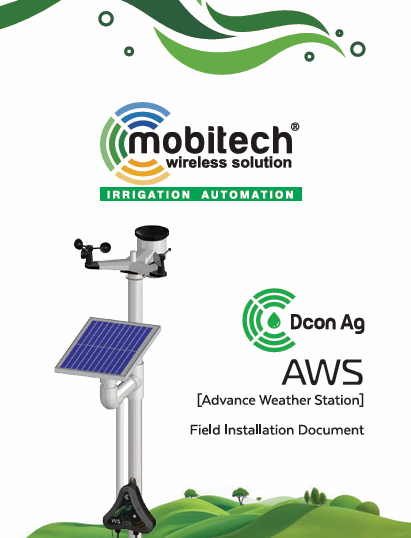
Weather information can play an important role in irrigation planning.
Rainfall, temperature, humidity, and other weather parameters can help
farmers adjust irrigation according to changing environmental conditions.
Artificial Intelligence
AI has the potential to make irrigation systems even smarter.
By analyzing historical farm data, weather patterns, crop information,
and soil conditions, AI-based systems can help predict irrigation
requirements and improve decision-making.
Machine Learning
Machine learning can identify patterns from historical irrigation and crop data.
Over time, this can help systems improve irrigation recommendations based
on actual farm conditions.
Cloud-Based Farm Monitoring
Cloud platforms allow irrigation data to be stored and accessed remotely.
Farmers and agricultural teams can monitor irrigation performance,
review historical information, and manage connected devices from different locations.
Smart Irrigation vs Traditional Irrigation
Feature | Traditional Irrigation | Smart Irrigation |
|---|
| Motor Control | Mostly manual | Automated / Remote |
| Irrigation Scheduling | Fixed / Manual | Automated & Configurable |
| Soil Monitoring | Manual Observation | Sensor-Based |
| Weather Integration | Limited | Possible |
| Remote Control | Usually Unavailable | Available |
| Water Management | Less Precise | More Optimized |
| Large Farm Management | Difficult | Easier to Manage |
The biggest difference is decision-making.
Traditional irrigation depends heavily on manual observation, while
smart irrigation combines automation and field data to support more
efficient irrigation management.
What Will Smart Irrigation Look Like in the Future?
The next generation of irrigation systems will likely become more connected,
predictive, and autonomous.
Monitor the Soil
→
Check Weather Conditions
→
Analyze Crop Requirements
→
Calculate Irrigation Needs
→
Operate Motors & Valves
→
Record Results
Future smart farms may also integrate irrigation with:
- Agricultural weather stations
- Soil sensors
- Fertigation systems
- Water-level monitoring
- Crop monitoring
- AI-based analytics
- Remote farm management platforms
- Automated motor protection
This means irrigation will move from simply
“watering the crop” to
“managing the crop’s water requirements intelligently.”
Is Smart Irrigation Suitable for Every Farm?
Smart irrigation can be useful for a wide range of agricultural applications, including:
- Coconut farms
- Banana plantations
- Arecanut farms
- Pomegranate farms
- Oil palm plantations
- Vegetable farms
- Fruit orchards
- Large-scale agricultural farms
The ideal system depends on factors such as
farm size, number of motors, number of valves, water sources,
crop type, irrigation method, and automation requirements.
Final Thoughts
The future of agriculture will depend not only on producing more crops
but also on using resources more intelligently.
A Smart Irrigation System combines automation, sensors,
connectivity, and data to help farmers manage one of the most important
resources on a farm: water.
From automatic motor control and soil moisture monitoring to IoT connectivity
and AI-powered decision-making, irrigation technology is moving toward
a more connected and efficient future.
For modern farmers, smart irrigation is not simply about installing technology.
It is about creating a smarter way to manage water, energy,
labour, and crop requirements.
The future of farming is smart.
And the future of irrigation is automated, connected, and data-driven.