
































Table of Contents

How to Choose the Best Soil Moisture Sensors for Agriculture in India
Choosing the right soil moisture sensors is an important step for farmers adopting smart irrigation and precision agriculture. With increasing water scarcity, unpredictable rainfall, and rising irrigation costs, knowing exactly when crops need water can make a major difference to farm efficiency.
A soil moisture sensor continuously monitors the amount of moisture available in the soil and provides useful information for irrigation decisions. When connected with an automated irrigation system, it can help farmers avoid unnecessary watering, reduce water wastage, lower pumping costs, and maintain healthier crops.
However, not every soil moisture sensor is suitable for every farm. Soil type, crop, root depth, irrigation method, sensor technology, connectivity, installation conditions, and farm size all need to be considered before choosing a sensor.
Why Are Soil Moisture Sensors Important?
Traditional irrigation is often based on fixed schedules or visual observation. This can result in watering crops even when the soil already contains enough moisture. On the other hand, delaying irrigation for too long can cause water stress.
A soil moisture sensor helps reduce this guesswork by measuring moisture directly from the soil. Farmers can use this information to decide when irrigation is required and how frequently crops should be watered.
What is a Soil Moisture Sensor?
A soil moisture sensor is an electronic device used to measure the moisture content of soil. The sensor is installed at a suitable depth within the crop’s root zone and detects changes in soil moisture.
Depending on the system, the collected data can be displayed locally or transmitted to a controller, cloud platform, or mobile application. This allows farmers to monitor soil conditions without manually checking the field every time.
When soil moisture monitoring is connected with smart irrigation automation, irrigation decisions can become more accurate and efficient.
How Does a Soil Moisture Sensors Work?
A soil moisture sensor is placed inside the soil where crop roots actively absorb water. The sensor detects changes in the physical or electrical properties of the soil caused by variations in moisture.
Phase 01
Measure
The sensor detects the precise moisture level directly around the root zone.
Phase 02
Transmit
The collected data is wirelessly sent to a monitoring system, controller, or IoT platform.
Phase 03
Monitor
Farmers view live soil moisture reports and understand changing field conditions.
Phase 04
Act
The insights are used to schedule or completely automate irrigation based on precise crop needs.
How to Choose the Best Soil Moisture Sensors for Your Farm
Before purchasing a soil moisture sensor, consider the following factors.
Soil Type
Consider whether your farm has sandy, loamy, clay, or mixed soil. Sensor performance and calibration can vary depending on soil characteristics.
Crop Type
Different crops have different water requirements and root depths. Select a sensor and installation depth appropriate for the crop.
Root Zone
The sensor should be positioned where the crop’s active roots are taking up water so that the readings are useful for irrigation decisions.
Farm Size
Large farms may require multiple sensors at different locations to account for variations in soil, crop growth, and irrigation coverage.
Connectivity
Choose a communication method such as GSM, LoRa, Wi-Fi, Bluetooth, or IoT according to your farm’s network availability and monitoring requirements.
Weather Resistance
Outdoor agricultural sensors should be designed to withstand moisture, dust, heat, and changing weather conditions. Check the manufacturer’s IP rating before installation.
Calibration
Calibration is important for obtaining meaningful readings. Choose sensors with appropriate calibration for your soil and application.
Integration
If you plan to automate irrigation, make sure the sensor is compatible with your irrigation controller or IoT platform.
Where Should a Soil Moisture Sensors Be Installed?
Correct installation is just as important as choosing the right sensor. A sensor installed in the wrong location may provide readings that do not represent the actual moisture conditions around the crop roots.
- Install the sensor within the active root zone.
- Avoid placing it directly under a drip emitter.
- Choose a representative location within the irrigation zone.
- For large farms, consider monitoring multiple zones.
- Ensure the sensor has good contact with the surrounding soil.
Important Installation Tip
Do not install the sensor immediately next to a drip emitter. The area directly around an emitter can become temporarily saturated and may not represent the overall moisture condition of the root zone.
Benefits of Soil Moisture Sensors in Agriculture
1. Better Water Management
Real-time soil moisture information helps farmers avoid unnecessary irrigation and apply water according to actual field conditions.
2. Supports Healthier Crop Growth
Maintaining suitable soil moisture levels can help reduce stress caused by excessive watering or insufficient water.
3. Reduces Irrigation Costs
More efficient irrigation can reduce unnecessary pump operation, which may help lower electricity or fuel consumption.
4. Reduces Water Wastage
Instead of following a fixed irrigation schedule, farmers can use actual soil conditions to determine when watering is needed.
5. Enables Smart Irrigation
Soil moisture sensors can be integrated with automated irrigation controllers to create data-driven irrigation systems.
6. Supports Precision Agriculture
Continuous soil data gives farmers better visibility into field conditions and supports more informed farm management decisions.
Soil Moisture Sensors for Different Crops
| Crop / Farm Type | Why Monitor Soil Moisture? |
|---|---|
| Coconut Farms | Helps monitor moisture around the root zone and improve irrigation scheduling. |
| Banana Farms | Supports consistent moisture management for a water-sensitive crop. |
| Vegetable Crops | Helps prevent both excessive watering and moisture stress. |
| Arecanut Farms | Useful for monitoring moisture in plantation root zones. |
| Greenhouses | Provides continuous information for controlled irrigation. |
Common Mistakes to Avoid
Avoid these frequent pitfalls when selecting and deploying soil moisture monitoring systems in your farm:
1. Prioritizing Price Over Durability
Choosing the cheapest sensors often leads to corrosion and failure within a single season.
2. Incorrect Placement
Installing sensors too close to drip emitters or outside the active root zone gives false readings.
3. Insufficient Sensor Coverage
Using only a single sensor across diverse soil zones or large land parcels.
4. Neglecting Calibration & Data
Ignoring factory calibration guidelines or failing to monitor dashboard analytics regularly.
Which is the Best Soil Moisture Sensor for Agriculture?
There is no single soil moisture sensor that is perfect for every farm. The best choice depends on the crop, soil, required accuracy, farm size, irrigation method, and monitoring requirements.
For general agricultural applications, a durable capacitive sensor can provide a good balance between reliability, maintenance, and cost. For advanced precision agriculture applications, farmers may consider technologies such as Irrometer sensors where reliable soil moisture monitoring is required.
Looking for a Smart Soil Moisture Monitoring Solution?
Mobitech Wireless Solution provides smart agriculture solutions that include IoT-based soil moisture monitoring for modern farming applications. Their solutions are designed to help farmers monitor soil conditions, understand irrigation requirements, and integrate sensor data with smart irrigation systems.
For farmers looking to move from fixed irrigation schedules to data-driven irrigation, a smart soil moisture monitoring solution can be an important part of a modern automated farming system.
Conclusion
Final Thoughts on Smart Irrigation
Soil Mositure Product
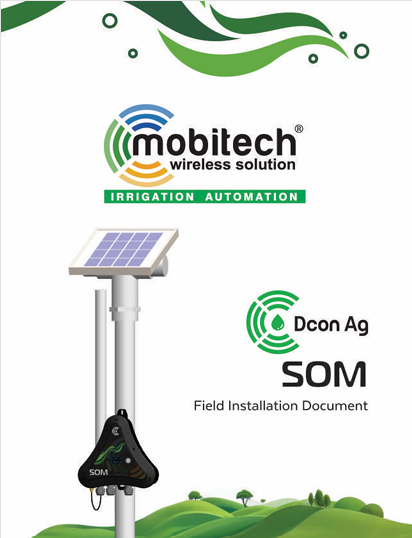
Upgrade Your Farm with SOM
Make every drop of water count with soil moisture monitoring and intelligent IoT-driven decisions.
Key Specifications
Smart Irrigation Starts Here
Monitor real-time conditions, optimize schedules, and reduce electricity costs effortlessly.
If you have any questions about this , kindly fill in the form below.
What is the purpose of a soil moisture sensor?
A soil moisture sensor measures the amount of moisture in the soil and helps farmers determine when irrigation may be required.
Are soil moisture sensors useful for large farms?
How do moisture sensors work?
Soil moisture sensors are placed inside the soil within the active root zone to detect variations in moisture levels. Depending on the technology used (such as capacitive, resistive, or tension-based models), they measure changes in electrical resistance, dielectric properties, or soil water tension. The sensor then transmits this data to a monitoring display, controller, or IoT platform, enabling farmers to see real-time field conditions and determine exact watering requirements.
What is the best soil moisture sensor?
Can I use a single soil moisture sensor for an entire farm?
No, relying on a single sensor across a large or diverse land area is a common mistake because soil characteristics, slope, sun exposure, and crop growth can vary significantly across different zones.
For accurate farm-wide management, larger farms or fields with varied topography should install multiple sensor monitoring nodes across different irrigation zones.