 Irrigation Automation
VCN & VCN4 (Valve Control Unit)
VCN and VCN4 wirelessly connect to AIR and operate DC solenoid valves.

SOM (Soil Moisture Monitor Unit)
Measures soil moisture, soil temperature, and atmospheric temperature in real time.

WS (Weather Station Monitor Unit)
It monitors wind speed, wind direction, temperature, humidity, rainfall, and weather forecasts.

FRT (Fertigation Control Unit)
FRT wirelessly receives data from AIR and the fertigation controller to enhance automation.
VCN & VCN4 (Valve Control Unit)
VCN and VCN4 wirelessly connect to AIR and operate DC solenoid valves.
SOM (Soil Moisture Monitor Unit)
Measures soil moisture, soil temperature, and atmospheric temperature in real time.
WS (Weather Station Monitor Unit)
It monitors wind speed, wind direction, temperature, humidity, rainfall, and weather forecasts.
FRT (Fertigation Control Unit)
FRT wirelessly receives data from AIR and the fertigation controller to enhance automation.
 Micro Irrigation
 Large Water Management System








Farm Configuration
Introduction
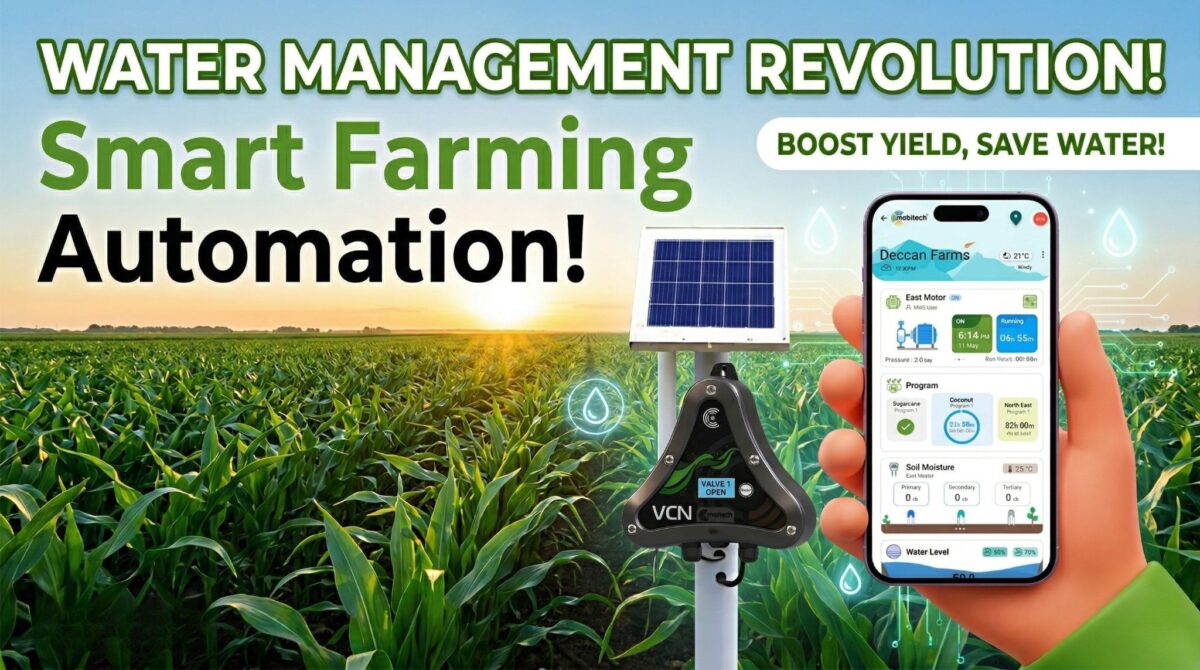
Water management is one of the biggest challenges farmers face today. With unpredictable rainfall, increasing water scarcity, and rising operational costs, traditional irrigation methods are becoming inefficient. This is where irrigation automation for farmers is making a major impact in modern agriculture.
Irrigation automation for farmers allows precise control over water usage using smart technology. By implementing automated irrigation systems, farmers can improve crop yield, reduce labor efforts, and ensure efficient water management. Solutions like the Dcon Ag AIR irrigation automation controller are helping farmers adopt smarter and more sustainable farming practices.
What is Irrigation Automation?
Irrigation automation is a modern farming technique that uses sensors, controllers, and mobile-based applications to manage irrigation automatically. Instead of manual watering, irrigation automation for farmers ensures that crops receive the right amount of water at the right time.
With irrigation automation for farmers, watering schedules can be controlled based on real-time data such as soil moisture, weather conditions, and crop requirements. This not only improves efficiency but also minimizes water wastage.
- Soil moisture levels
- Weather conditions
- Crop requirements
Top Benefits of Irrigation Automation for Farmers
1. Save Water Efficiently
Water is one of the most valuable resources in agriculture. Irrigation automation for farmers ensures that water is used efficiently by delivering the exact amount needed for crops. This reduces water wastage and supports sustainable farming practices.
- Reduce water usage by up to 50%
- Prevent over-irrigation
- Improve water conservation
2. Increase Crop Yield
Consistent and proper irrigation plays a crucial role in crop growth. Irrigation automation for farmers helps maintain optimal soil moisture levels, leading to healthier crops and higher productivity.
- Improves plant health
- Reduces crop stress
- Enhances quality and yield
3. Reduce Labor Costs
Manual irrigation requires constant monitoring and labor. With irrigation automation for farmers, most of the work is automated, reducing the need for manual intervention.
- No need for continuous supervision
- Remote control through mobile devices
- Lower labor expenses
4. Save Electricity and Energy
Efficient use of irrigation systems also helps reduce energy consumption. Irrigation automation for farmers ensures that pumps operate only when required, avoiding unnecessary power usage.
- Reduce motor running time
- Lower electricity bills
- Improve energy efficiency
5. Remote Control and Monitoring
One of the biggest advantages of irrigation automation for farmers is the ability to monitor and control irrigation remotely. Farmers can manage their fields from anywhere using mobile devices, making farming more convenient and efficient.
- Control irrigation from anywhere
- Receive real-time updates
- Monitor field conditions easily
6. Prevent Crop Damage
Improper irrigation can lead to overwatering or underwatering, which can damage crops. Irrigation automation for farmers helps maintain the right balance, ensuring optimal crop health.
- Maintain proper soil moisture
- Prevent root diseases
- Ensure uniform crop growth
7. Data-Driven Farming
Modern irrigation systems provide valuable insights that help farmers make better decisions. Irrigation automation for farmers supports data-driven farming by tracking water usage and crop performance.
- Analyze irrigation patterns
- Improve decision-making
- Optimize resource usage
Why Farmers Should Switch to Irrigation Automation
Traditional irrigation methods are time-consuming and inefficient. Irrigation automation for farmers offers a smarter approach by improving productivity, saving time, and reducing costs. By adopting advanced solutions like the Dcon Ag AIR system, farmers can enhance efficiency and achieve long-term sustainability in agriculture.
Conclusion
Irrigation automation for farmers is not just a technological upgrade but a necessity for modern agriculture. With increasing challenges such as water scarcity and rising costs, adopting irrigation automation helps farmers stay ahead by improving efficiency and productivity.
By implementing irrigation automation for farmers, it is possible to save water, reduce labor, and increase crop yield significantly. Investing in reliable solutions ensures better farm management and sustainable growth for the future.