



























Case Study: Impact of Smart Irrigation on Coconut Farming
May 9, 2024
Comparative Case Study on Irrigation Efficiency
May 15, 2026
Impact of Smart Irrigation on Water Efficiency, Labor Reduction, and
Crop Productivity: A Mango Farm Case Study

Abstract
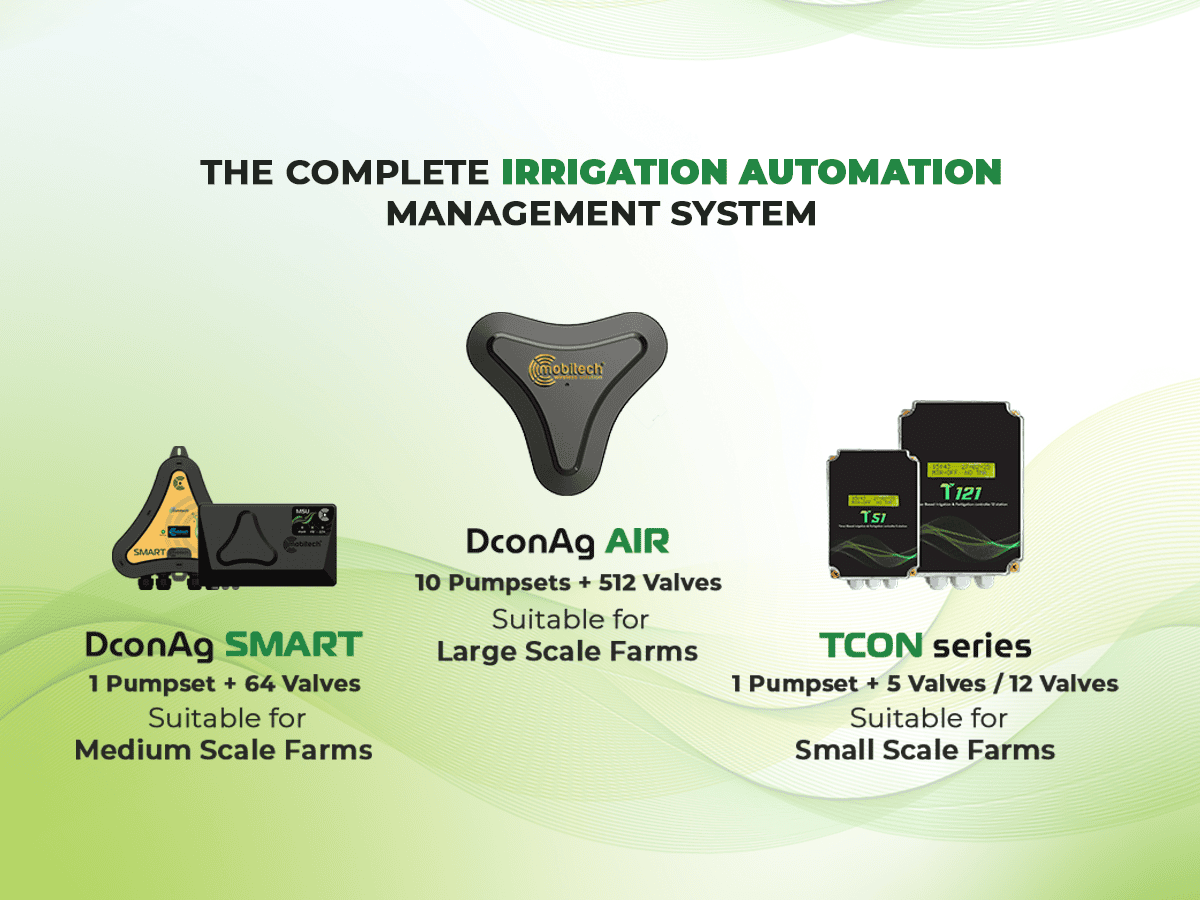
This case study evaluates the impact of the DCON Ag Air Smart Irrigation System on a 9-acre mango farm. It compares traditional, semi-automated, and fully automated irrigation methods to analyze improvements in water usage, fertilizer efficiency, labor reduction, and crop yield.
The results show significant savings in resources along with better crop quality and higher productivity, demonstrating the effectiveness of smart irrigation in modern farming.
Project Overview
This case study evaluates the impact of implementing DCON Ag Air Smart Irrigation System on a 9-acre farm by comparing traditional, semi-automated, and fully automated irrigation methods.
Objectives
- Optimize water usage
- Improve fertilizer efficiency
- Reduce labor dependency
- Enhance crop yield & quality
- Increase overall farm profitability
Farm Details
Authors
Mr. Kaliraj
Contributes to agri-technology research and field analysis, supporting data collection, system evaluation, and performance assessment of smart irrigation systems.
Ms. Subiha
Contributes to agri-technology research and field analysis, supporting data collection, system evaluation, and performance assessment of smart irrigation systems.
Experimental Methodology
The total land was divided into 3 equal zones (3 acres each) to compare different irrigation methods.
Zone 1: Traditional Method
Irrigation (Manual Scheduling)
In this zone, irrigation was carried out manually based on the farmer’s experience and visual observation of soil conditions. The irrigation schedule varied weekly depending on weather and field requirements, leading to inconsistent watering patterns. Typically, irrigation was performed 2 to 3 times per week, with each session lasting between 2 to 3 hours.
Water Usage (Approximate)
Water usage was not measured precisely and depended on estimation. The average water consumption per irrigation ranged between 25,000 to 32,000 liters for 3 acres. Weekly water usage varied from 60,000 to 95,000 liters, indicating a lack of control and efficiency.
Fertilizer Usage (Manual Application)
Fertilizers were applied manually without precise calculation. The quantity and timing were based on farmer judgment, often resulting in overuse or underuse.
Labor Usage
All operations were manual, requiring 2 to 3 workers. Labor costs ranged between ₹3,500 and ₹7,500 per week.
Challenges:
- Overwatering / under-watering
- Fertilizer wastage
- Inconsistent crop growth
Zone 2: Semi-Automated System
Irrigation (Automated Scheduling)
In this zone, irrigation was controlled using automated timers and basic controllers with predefined schedules, ensuring consistent water application compared to manual methods. Fertigation was still manual but required less effort due to improved irrigation control. Daily operations took approximately 30 minutes, improving efficiency.
Water Usage (Controlled)
Water usage was regulated through automation. Weekly consumption ranged between 50,000 and 75,000 liters for 3 acres.
Fertilizer Usage (Manual with Monitoring)
Fertilizer application remained manual but was better planned, reducing wastage. Weekly costs ranged from ₹1,000 to ₹2,200.
Labor Usage
Labor requirements reduced to 1–2 workers. Weekly costs ranged from ₹2,500 to ₹5,000.
Overall Observation:
Improved water management and reduced labor dependency, but lacked fertigation precision.
- Better water control
- Reduced labor
- More consistent irrigation
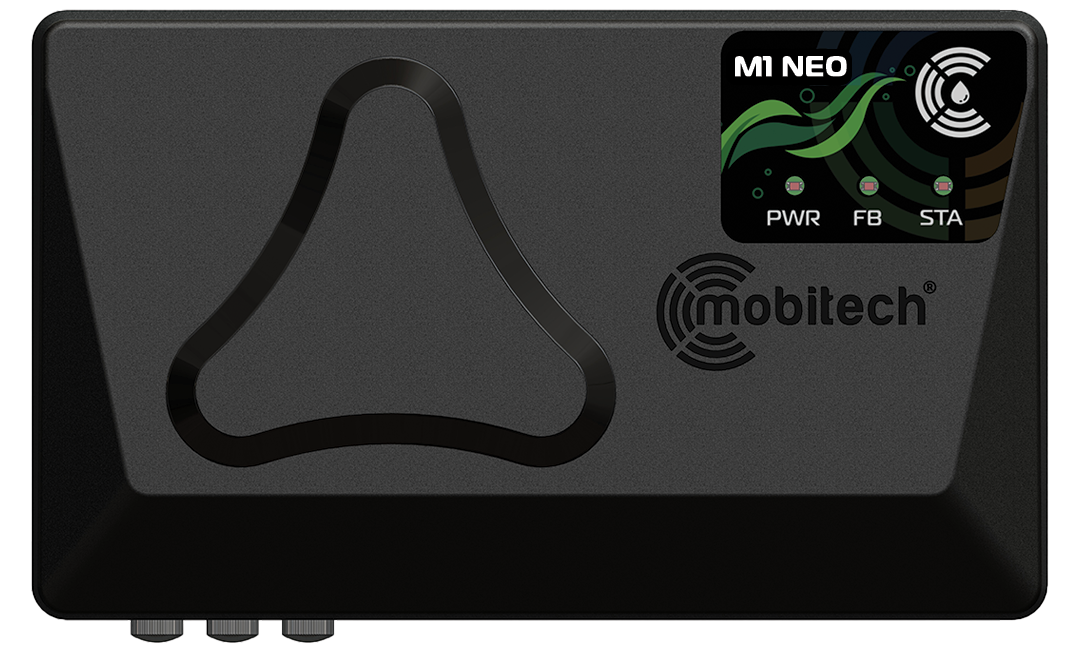
Zone 3: DCON Ag Air (Full Automation)
Irrigation (Smart Automation)
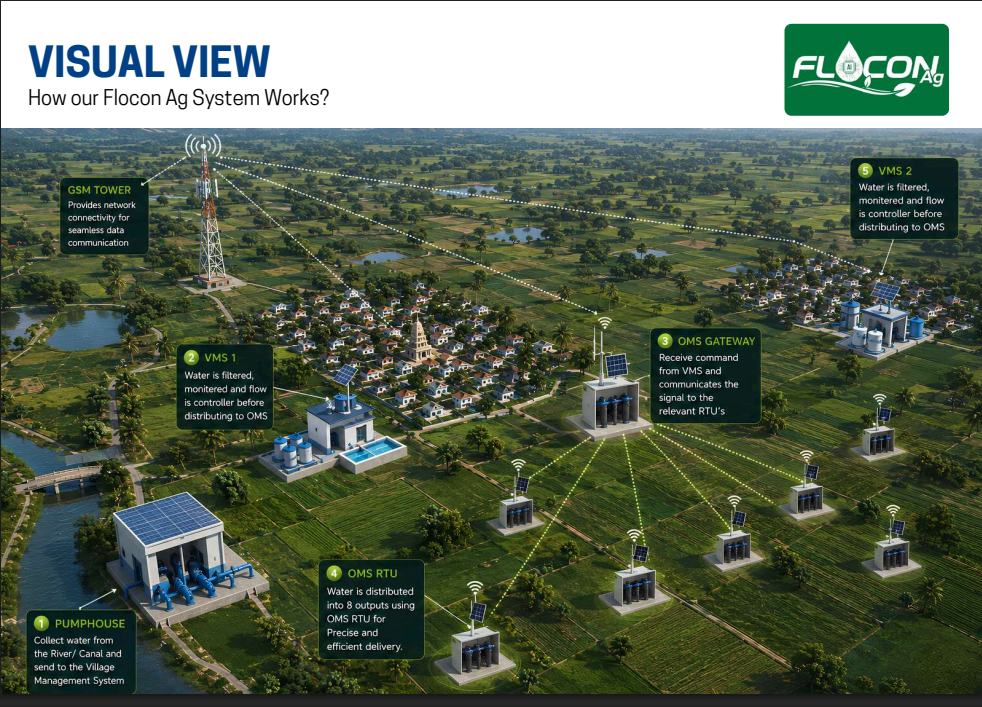
Fully automated irrigation based on real-time soil moisture data. Water and nutrients were applied only when required, ensuring optimal crop growth and minimal wastage.
Water Usage (Optimized)
Weekly usage ranged between 35,000 and 55,000 liters for 3 acres.
Fertilizer Usage (Automated Fertigation)
Fertilizers were applied automatically with precise dosing, reducing wastage. Weekly cost ranged from ₹800 to ₹1,800.
Labor Usage
Minimal labor required due to automation. Weekly cost ranged from ₹1,500 to ₹3,000.
- Precision farming
- Minimal human error
- Complete remote control
Final Comparison: Traditional vs Semi-Automated vs Fully Automated
1. Water Usage Comparison (3 Acres – Weekly Average)
Insight: DCON Ag Air achieves the highest water efficiency by reducing wastage through real-time control.
2. Fertilizer Usage & Cost (8 Weeks Total)
Insight: Automated fertigation reduces fertilizer wastage by ~30–40% and improves nutrient absorption.
3. Labor Usage & Cost (8 Weeks Total)
Insight: Full automation reduces labor dependency by up to 60–70%.
4. Irrigation Efficiency
5. Crop Performance
Overall Benefits Summary
The transition from traditional to fully automated irrigation demonstrates a clear improvement in efficiency, control, and profitability. The DCON Ag Air system delivers superior performance across all key agricultural parameters, making it a reliable solution for sustainable and precision farming.
Return on Investment (ROI) Analysis
The DCON Ag Air Smart Irrigation System provides strong financial benefits by reducing water usage, fertilizer consumption, and labor costs while improving yield quality and productivity.
Key Takeaways
Smart irrigation transforms farming efficiency, reduces costs, and improves yield quality.
Water Savings
40–50%
Fertilizer Reduction
30–40%
Labor Cost Reduction
60–70%
Crop Performance
High Yield & Consistency


References
Primary Data Sources
- Field data collected from 9-acre mango farm, Erode (Study Period)
- Internal reports – DCON Ag Air Smart Irrigation System, Mobitech Wireless Solution Pvt. Ltd.
Institutional & Government Publications
- Food and Agriculture Organization (FAO) – Irrigation Water Management, Crop Yield Response to Water, Micro-Irrigation Guidelines
- Indian Council of Agricultural Research (ICAR) – Micro Irrigation Guidelines, Drip Irrigation Practices
- ICAR – IIHR – Mango Cultivation Practices in India
- National Horticulture Board (NHB) – Mango Cultivation Guide
- Ministry of Agriculture & Farmers Welfare – PMKSY Guidelines
- Central Institute for Subtropical Horticulture (CISH) – Mango Production Manual
- International Commission on Irrigation and Drainage (ICID) – Drip Irrigation Manual
- World Bank – Irrigation and Water Resource Management Report
- International Water Management Institute (IWMI) – Water Efficiency in Agriculture
Research & Technical Studies
- Drip irrigation and nutrient management in mango
- Economic feasibility of drip irrigation in mango cultivation
- Soil wetting and irrigation optimization in mango orchards
- Irrigation and fertigation practices in mango cultivation
- Effect of irrigation regimes on mango productivity
- Water relations and irrigation requirements of mango
- Mango crop water use modeling (FAO approach)
- Influence of irrigation scheduling on mango yield
- Drip irrigation impact on mango yield and quality
- Fertigation efficiency in orchard crops
- Water use efficiency in fruit crops
- Precision irrigation techniques in horticulture
- Role of evapotranspiration in irrigation planning
- Soil moisture-based irrigation scheduling
- Sustainable irrigation practices in semi-arid regions
- IoT-based smart irrigation system design
- Predictive irrigation scheduling models
- Sensor-based irrigation control systems
- Cloud-based farm monitoring systems
- Wireless irrigation automation technologies
- AI-based irrigation decision systems
- Micro irrigation adoption trends in India
- Water conservation technologies in agriculture
- Fertilizer management practices in orchards
- Labor optimization using automation
- Precision farming implementation reports
- Sustainable agriculture studies
- Climate impact on irrigation practices
- Agricultural water scarcity strategies
- Best practices in fertigation systems
- Irrigation scheduling tools & software
- Smart irrigation controller manuals